

On a late afternoon in early May 2024, the crimson glow of the sunset painted the sky above the dense wetlands on the outskirts of Everglades National Park, Florida. A humid breeze rustled through the reeds, carrying the earthy tang of mud and wild moss. Taking a leisurely stroll along a rugged dirt trail beside an irrigation canal, Chloe Adams—an avid lover of wildlife—suddenly stopped in her tracks, startled by an unusual disturbance right along the murky waterline.
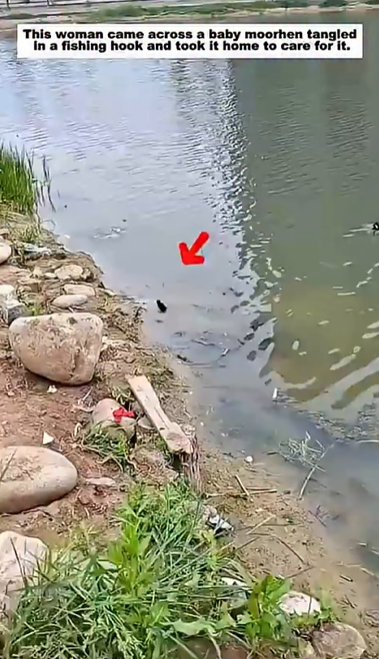
Concealed behind a cluster of moss-grown rocks, a tiny black speck was thrashing frantically against the current. Drawing closer, the sight made Chloe’s chest tighten: it was a newborn moorhen chick, merely a few weeks old, its downy black feathers thoroughly soaked and heavy with water. A discarded length of transparent monofilament fishing line had turned into a lethal trap, wound tightly around the chick’s frail, spindly legs. The sharp steel fishhook was anchored deep into decaying roots under the mud, holding the helpless creature in a desperate, half-submerged limbo.
Exhausted after hours of futile struggling, the young bird flapped its half-feathered wings wildly, splashing muddy water into the air. Its bright red bill gaped wide to gasp for thin air, its frail peeps growing fainter by the second. Had the water level risen even an inch or a predator fish swam by, the chick would have been lost beneath the murky surface.
Without hesitation, Chloe slipped on her protective gloves and carefully waded into the slippery shoreline mud. Gently sliding her palm beneath the chick’s belly, she lifted its shivering body clear of the freezing water. With steady, patient hands, she worked free each loop of the razor-sharp line, easing the hook out from the submerged roots without injuring the bird’s tender limbs. Freed from the snare, the moorhen collapsed weakly into Chloe’s warm hands. She swaddled him snugly against her chest inside her jacket, drove straight home, and affectionately named him Pepper.
Back in her cozy room, Chloe lined a small carrier with thick fleece blankets to warm Pepper back to life. Pulled from the bone-chilling cold, the tiny chick steadily revived. Ravenous after his brush with death, Pepper stood tall on his oddly elongated legs, peeping eagerly as his crimson-shielded bill snapped up nutrient-rich morsels from Chloe’s fingertips. His beady black eyes shone with newfound life, gazing up at his savior in complete trust.
The weeks that followed unfolded into an extraordinary journey of patience, devotion, and gentle care. Chloe prepared small porcelain platters piled with fresh greens and plump mealworms, patiently setting him in shallow warm baths to reawaken his natural swimming instincts. After every splash, Pepper was bundled into a soft lemon-yellow towel, contentedly tucking his head into Chloe’s palm to drift off to sleep.
As he grew, Pepper showed remarkable intelligence and an endearing attachment to his human companion. His legs developed into long, greenish-yellow stilts with wide, slender toes—the signature tools that allow moorhens to step effortlessly across floating lily pads. Never straying far from Chloe’s heels, Pepper scurried alongside her slippers across the living room floor, hopped onto the armrest to watch her snack, and regularly cuddled into her hands for soothing head rubs as twilight fell.
With the turn of the seasons, the scruffy black ball of fluff that nearly drowned in the Florida canal completed a breathtaking metamorphosis into a magnificent adult moorhen. His plumage deepened into an iridescent blue-black sheen, crowned by a brilliant crimson facial shield that tapered sharply into a vibrant yellow beak. Though he possessed powerful wings capable of carrying him back into the boundless wild marsh, Pepper chose to stay close to the person who had pulled him from the brink. Strutting gracefully across the sunlit grass, he would gently lower his head to take fresh sprigs of herbs straight from Chloe’s hand—a tender close to a miraculous second chance at life.