


🌍 Introduction
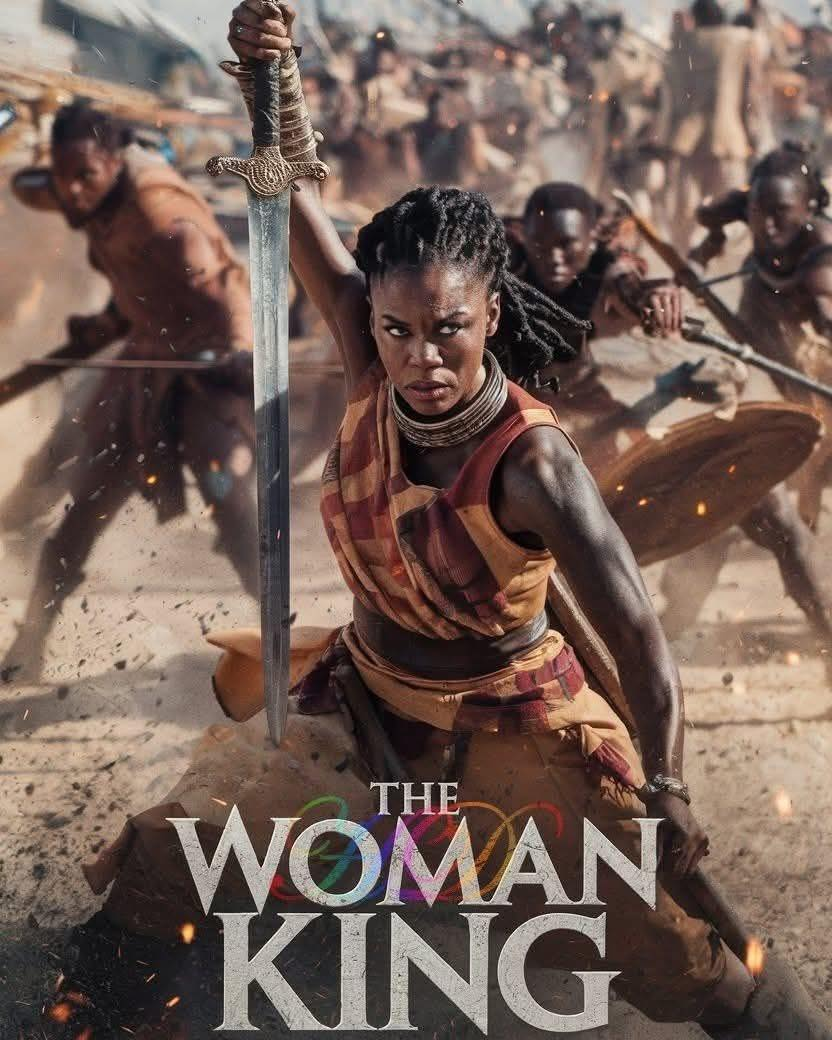
The Woman King is not just another historical epic. It’s a bold, emotionally charged, and action-packed drama that shines a spotlight on a lesser-known chapter of African history — the fierce all-female warriors of the Agojie in the Kingdom of Dahomey (present-day Benin). Inspired by real events, the film explores themes of freedom, identity, sisterhood, and legacy, all told through the lens of powerful Black women reclaiming their agency in a world shaped by colonialism and the transatlantic slave trade.
Director Gina Prince-Bythewood (known for The Old Guard) crafts a visually stunning and narratively compelling story that balances large-scale battle scenes with intimate character moments. With a commanding performance from Viola Davis, The Woman King challenges genre expectations and rewrites what a historical epic can look like.
🛡️ Plot Summary (No Major Spoilers)
Set in the 1820s, the story centers around General Nanisca (Viola Davis), the leader of the Agojie — an elite group of women warriors sworn to protect the Kingdom of Dahomey. The kingdom, under the rule of King Ghezo (John Boyega), is facing pressure from European colonial powers and rival African factions, both of whom are profiting from the booming slave trade.
Nanisca, a battle-hardened veteran, trains a new generation of recruits, including the young and defiant Nawi (Thuso Mbedu), who refuses to accept the limited role society offers her. As Nawi learns discipline and courage under Nanisca’s guidance, the kingdom must prepare for an inevitable clash that will test not only their military strength but their moral resolve — particularly when Nanisca’s own traumatic past resurfaces.
🎭 Performances & Characters
Viola Davis as Nanisca
Viola Davis delivers one of the most physically and emotionally demanding performances of her career. She embodies Nanisca with fierce strength, vulnerability, and wisdom — a woman haunted by her past but determined to forge a new future. Davis brings gravitas and authenticity, making Nanisca a true cinematic icon.
Thuso Mbedu as Nawi
As the audience’s point-of-view character, Mbedu’s Nawi is spirited, rebellious, and refreshingly relatable. Her character arc — from naive recruit to confident warrior — is both inspiring and heartbreaking. Mbedu brings a youthful energy that complements Davis’s grounded leadership.
Lashana Lynch & Sheila Atim
Lashana Lynch (No Time to Die) is charismatic and fierce as Izogie, a seasoned warrior who serves as a mentor to Nawi. Sheila Atim, as Amenza, brings a spiritual depth to the group, acting as Nanisca’s loyal confidante. Both actresses round out the ensemble with strong, memorable performances.
John Boyega as King Ghezo
Boyega surprises in a more restrained, regal role, portraying a king torn between political power and moral obligation. His chemistry with Davis adds layers to the story, as their characters navigate mutual respect and differing ideologies.
⚔️ Action & Choreography
The action in The Woman King is raw, visceral, and refreshingly practical. The fight choreography highlights the agility and precision of the Agojie warriors without relying heavily on CGI. The training montages, ambushes, and large-scale battles are intense but never glorified — violence is shown as a means of survival and resistance.
Prince-Bythewood emphasizes grounded realism, allowing the audience to feel the weight of every blow, the tension of every standoff, and the sacrifice behind every decision. The film pays close attention to the physical and emotional toll of war, especially for women.
🎨 Cinematography, Music & Production Design
Visually, the film is stunning. From sweeping shots of West African landscapes to the rich textures of costumes and traditional hairstyles, The Woman King is a feast for the eyes. Cinematographer Polly Morgan captures both the grandeur of the kingdom and the intimacy of personal moments.
Terence Blanchard’s score is deeply rooted in African rhythms and choral arrangements, enhancing the emotional impact of key scenes. The sound design and music work in harmony to give the film an epic, almost mythic quality.
The production design authentically recreates 19th-century Dahomey — its palaces, villages, and battlefields — in a way that feels both historically grounded and cinematically elevated.
🧠 Themes & Historical Context
While inspired by real events, The Woman King does take creative liberties, particularly in how it addresses Dahomey’s participation in the slave trade. The film doesn’t ignore this difficult truth — it confronts it, albeit in a way that centers moral conflict and personal responsibility.
At its core, the film is about:
- Female empowerment in patriarchal societies
- The complexity of leadership
- Intergenerational trauma and healing
- The fight for sovereignty and cultural survival
It also raises important questions: Can historical heroes still be flawed? What does resistance look like under imperial pressure? Who gets to write history?
🏆 Critical Reception & Cultural Impact
The Woman King received widespread acclaim from critics and audiences alike. It was praised for its representation, performances, and direction, and sparked important conversations about African history, Black female leadership, and the need for more diverse stories in mainstream cinema.
Despite some online controversy about historical accuracy, the film has been lauded for opening the door to more explorations of African and diasporic narratives in global cinema.
Viola Davis herself described the film as her “magnum opus”, and many agreed that it marked a turning point for Black women in Hollywood, both in front of and behind the camera.
✅ Final Verdict
The Woman King is more than a movie — it’s a movement. It reclaims lost history, challenges Hollywood norms, and delivers an unforgettable cinematic experience led by women of color at the height of their craft. It’s both educational and entertaining, emotional and empowering.
Whether you’re a history enthusiast, an action fan, or someone seeking stories that matter, The Woman King is a must-watch.
⭐️ Rating: 9/10
The 2025 Porsche Taycan Turbo GT Demolishes the Track
We lapped Porsche’s 1,000-plus-horsepower EV. It’s a friendly beast.
We turned a handful of laps at Circuito Monteblanco outside Seville, Spain, on the launch for the recently facelifted Taycan. It was eye opening.
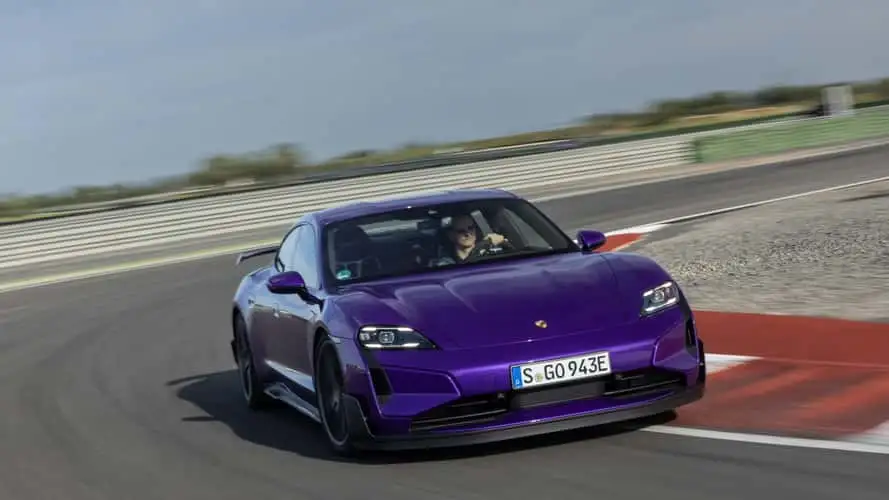
Based on the Turbo S, the Turbo GT gets a new silicon-carbide inverter for the rear motor that pushes total power output up to 1,019 hp during launch control and for 10 seconds in what Porsche calls “Attack Mode,” and in all other situations, you get 777 hp.
That power pairs to revised aerodynamics including a fixed rear wing on the Turbo GT model, wider wheels and tires, a specific tune for the standard active-suspension system, and some weight-savings measures. Nothing too extreme, well maybe except for the rear-seat delete with the Weissach Package. Even the power figure, though enormous, isn’t that much greater than the Turbo S’s. But these tweaks adds up to a very different electric sport sedan.
Even knowing chassis electronics have made ultra-high-horsepower cars so approachable, the Taycan Turbo GT intimidates. It’s still a 1,000-plus-horsepower car that weighs close to 5,000 pounds in its lightest form. I didn’t pay much attention in physics, but I do know that force is equal to mass times acceleration, and this has a lot of M and A.
