

The Haunting “Flaws”
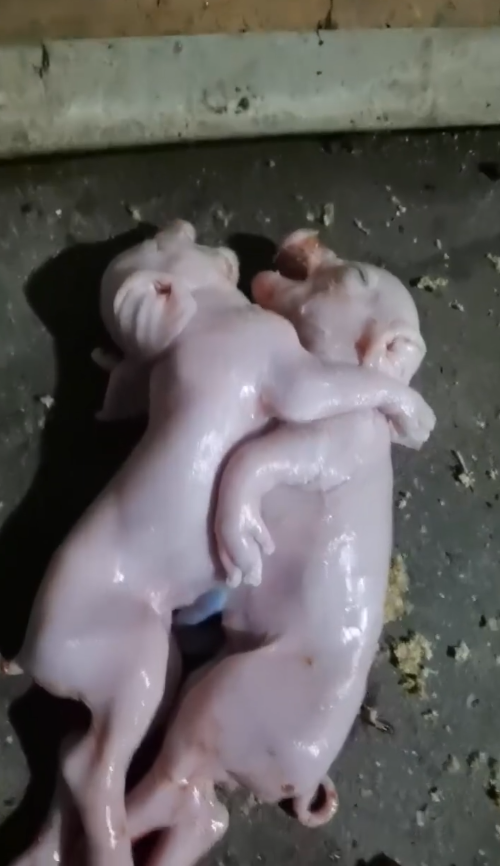
In the natural world, the birth of a new life is always considered a joy. However, sometimes that joy is accompanied by moments of unease. The image of two pigs mechanically joined together, their legs intertwined, and their faces distorted is no longer a strange sight in recent years.
From two-headed calves in coastal villages to mutated creatures resembling humans, each case has sparked intense debate. We are not just strange “anomalous objects” in the eyes of the public, but also challenging problems for scientists.
Decoding the “Curse” from Genes and the Environment
Why do these anomalies occur? University media outlets have offered several theories to explain this phenomenon:
Attempted separation: Similar to the current situation with the adjacent birthmark, the Thai piglets did not completely separate during the separation process, creating opportunities for painful fighting.
Genetic mutation: Errors in DNA replication lead to missing or extra body parts.
Impact from the “Outside World”: This is the most worrying factor. The excessive use of agricultural chemicals, pesticides, or water pollution on farms could be the silent “culprit” behind the development of animal fetuses from within the womb.
Fragile Life and a Humanistic Perspective
Most variants have very short lifespans. We are born in pain and die before we can fully experience the world. However, the image of the two piglets in the video “hugging” each other evokes a strange emotion. It reminds us that, in whatever form, the desire to live and connect remains.
Looking at these creatures, we shouldn’t just stop at curiosity or concern for danger. It’s a wake-up call about ecological balance. Are we inadvertently encroaching on nature, creating more and more of these “flawed versions” appearing every day?